First, please consult your husband’s doctor or a registered dietitian for personalised advice. As a general evidence-based guidance:
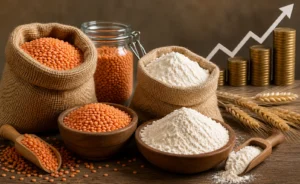
Research shows that when 100% of the wheat bran is retained in the atta, significantly more dietary fibre is present. An Indian study found that wheat bran supplementation lowered fasting glucose levels by an average of 22.8 mg/dL. Multigrain atta, which blends whole wheat with grains like barley, oats, bajra, and ragi, typically has a GI of 44–50, and research has shown that rotis made from multigrain flour have lower glycemic responses compared to whole wheat rotis.
A practical blend works better than any single grain: 60% biofortified wheat + 30% jowar/bajra + 10% chickpea (besan) gives good roti texture, a low glycemic index (around 50), and useful protein. Plain wheat atta is too high GI for daily use; pure millet atta is hard to roll.
Practical tips for your husband’s rotis:
- Use multigrain or jowar-wheat blend atta
- Roll rotis thin — smaller surface area means lower glycemic load
- Always pair rotis with dal, sabzi, or curd — never eat roti alone
- Avoid ghee on rotis unless prescribed
- Walk 10–15 minutes after meals
For a diabetic family member, AapkiChakki.com can be a genuine health partner — offering freshly milled multigrain blends with grains like ragi, jowar, bajra, and barley that help manage blood sugar naturally. Fresh-ground flour also means maximum fibre and micronutrient retention.